

Cold storage insulation materials are currently mainly divided into three types: PU polyurethane, PIR modified polyurethane, and EPS polystyrene. These three differ significantly in insulation performance, price, and suitable application scenarios. In practical applications, the appropriate material can be selected based on specific needs.
PU polyurethane sandwich panels are the preferred material for general cold storage.
With a thermal conductivity of 0.022-0.024 W/m·K, high closed-cell rate, and low water absorption, their thermal insulation and sealing performance is superior to ordinary insulation panels. The panels have high structural strength and are not easily deformed. The flammability rating can reach B1 (with added flame-retardant formulation), and is mostly B2 under normal operating conditions. The long-term applicable temperature range is -35℃ to +10℃, suitable for most commercial cold storage conditions, including fresh-keeping warehouses, low-temperature warehouses, and general frozen warehouses. The panels have tight joints, effectively reducing cold bridging and leakage problems. With outstanding overall cost-effectiveness, it is currently the most widely used cold storage insulation material on the market. The market price is moderate, suitable for conventional cold chain projects with a controllable budget.
PIR modified polyurethane sandwich panel, specifically designed for high-end low-temperature cold storage.
Its thermal conductivity reaches 0.019-0.022 W/m·K, offering slightly better insulation performance than PU panels. It boasts superior flame retardancy, is less prone to producing molten droplets during combustion, and consistently achieves B1 flame retardancy rating. It also exhibits better high-temperature resistance. With a long-term operating temperature range of -55℃ to +15℃, it shows minimal insulation degradation under ultra-low temperature conditions. The panel exhibits stronger anti-aging properties, making it suitable for high-end projects with stringent fire safety standards, such as blast freezers, ultra-low temperature cold storage facilities, and medical cold chain warehouses. While offering excellent insulation and low-temperature stability, its main drawback is its higher cost, exceeding that of ordinary PU panels by 15%-30% per square meter. It is more suitable for critical projects with high safety and temperature control requirements.
EPS polystyrene sandwich panel, an economical alternative for cold storage.
EPS insulation panels are lightweight, inexpensive, and easy to install, making them suitable for cold storage facilities with limited budgets and less stringent temperature requirements. Its thermal conductivity is 0.038–0.041 W/m·K, indicating weak thermal insulation capabilities and poor moisture and frost resistance. Long-term use at low temperatures can lead to water absorption, deformation, and decreased insulation performance. It is only suitable for fruit and vegetable preservation and ambient/constant temperature workshops, and is not recommended for low-temperature or frozen storage.
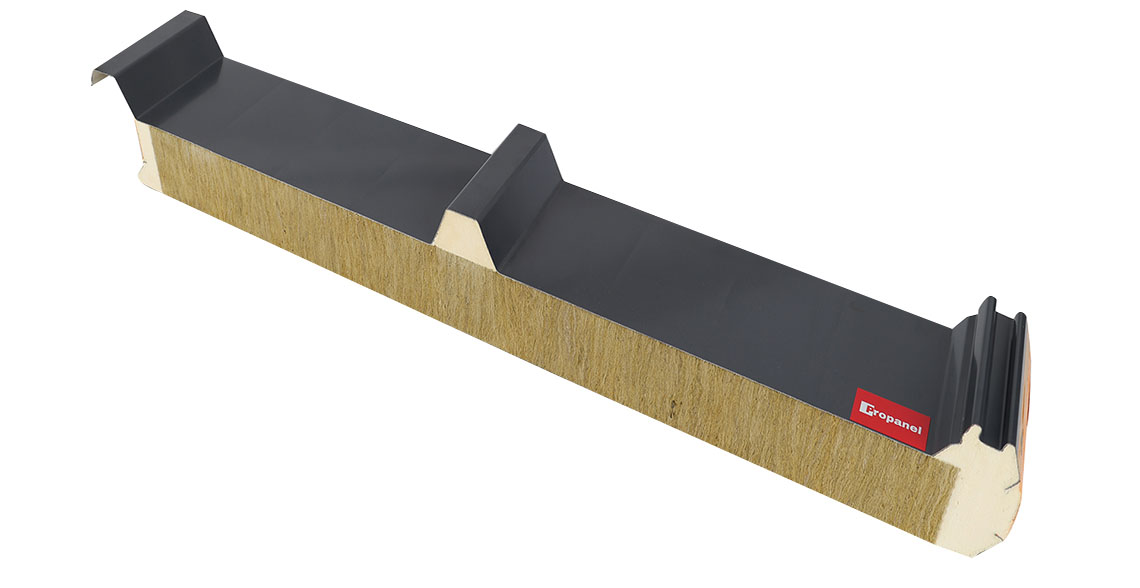
In summary, cold storage insulation materials should be selected according to specific needs. PIR insulation panels are preferred for high-end low-temperature or ultra-low-temperature cold storage, PU insulation panels are suitable for conventional commercial high and low-temperature cold storage, and EPS insulation panels are suitable for ordinary preservation and constant temperature scenarios.

Авторское право
@ 2026 CHENGDU PROPANEL TECH CO., LTD. Все права защищены
.  ПОДДЕРЖИВАЕМАЯ СЕТЬ
Hi! Click one of our members below to chat on